What Creates Hip Dips in the First Place?
Hip dips are a byproduct of anatomy. Your pelvis is made up of three bones, and where they sit in relation to each other impacts how the tendons and muscles attach to and lay over them. The wider your pelvis, the more likely you are to have hip dips.
In some cases, fat distribution also contributes to hip dips. Someone with hip dips who has a well-placed fat deposit on the upper thigh may not appear to have them while someone without fat there may.
Will Exercise “Fill In” Your Hip Dips?
You can’t fill in hip dips with exercise. They are present because of your skeletal structure, and no amount of exercise will change that.
Why and How Exercise Can Improve the Appearance of Hip Dips
Exercise won’t eliminate hip dip, but that doesn’t mean it can’t help minimize their appearance. Exercise can increase your muscle size and create a more filled-out look.
Working your gluteus medius and gluteus minimus muscles provides more volume at the sides of the hips, reducing the prominence of hip dips. Building the gluteus maximus muscle, the largest muscle in the buttock area, creates a smoother transition between the hips and the thighs. To keep things balanced and promote a uniform thigh appearance, you should also work your quadriceps and hamstrings
The Importance of Strengthening Your Hips, Whether You Have Hip Dips or Not
Whether you have hip dips or not, exercising to strengthen your hips is important for a number of reasons:
- Strong hips are the foundation of balance and stability, which are critical for both everyday movements and athletic activities. The muscles around the hip help to stabilize your pelvis during movement, which is essential for preventing falls, particularly in older adults.
- Weak hip muscles, particularly the gluteus medius, can lead to poor alignment of the pelvis and lower back, contributing to lower back pain. Strengthening the hips can help correct these imbalances and reduce stress on the lower back.
- Strengthening the hip muscles can enhance joint mobility and decrease the risk of degenerative joint diseases like osteoarthritis. Keeping the muscles around the hips strong can help maintain joint health and functionality.
- Strengthening the hip muscles reduces the strain on other parts of the body, such as the knees and lower back. It can also help prevent common injuries like ACL tears, hip labral tears, and muscle strains.
- Strong hip muscles contribute to better posture by supporting the spine and preventing the pelvis from tilting too far forward or backward. This helps alleviate problems caused by poor posture such as neck and shoulder pain.
- Athletes can benefit significantly from strong hip muscles. Activities like running, jumping, and cycling require powerful hip flexion and extension. Strong hips can improve speed, agility, and power, contributing to better performance across a wide range of sports.
Best Hip Dip Exercises and Workouts
There are many different exercises you can do to strengthen your hips and reduce the appearance of hip dips. Here are a few of the best:
- Side Leg Raises Lie on one side with your legs straight. Lift the top leg towards the ceiling and then lower it back down. This targets the gluteus medius and minimus. Perform the exercise with ankle weights or in a standing position to increase intensity.
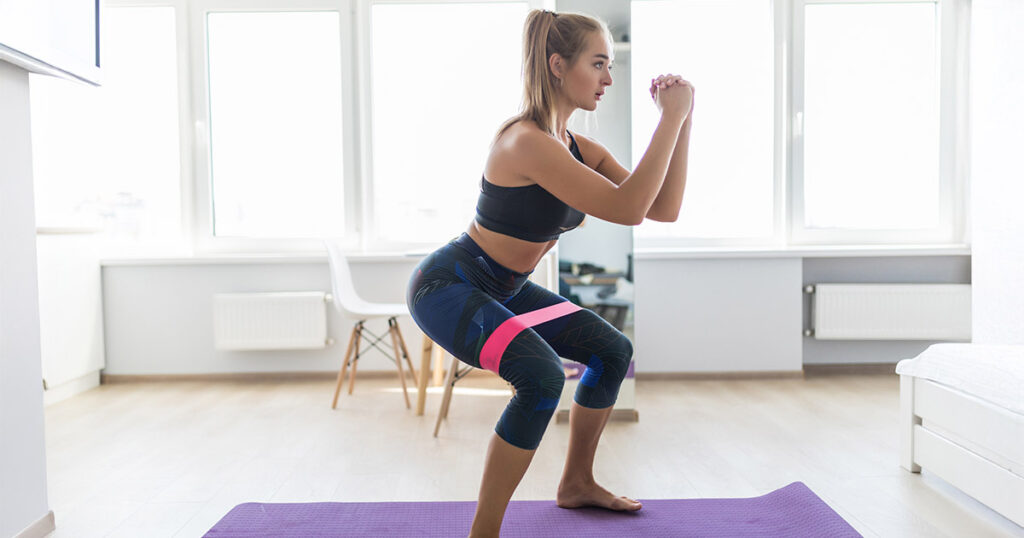
- Squats Stand with your feet shoulder-width apart and then lower your body back as if sitting in a chair, keeping your chest up and knees behind your toes. Then return to standing.
- Lunges Stand straight with your feet shoulder-width apart. Take a step forward with one leg and lower your hips until both knees are bent at about a 90-degree angle. Make sure your front knee is directly above your ankle. Stand up and switch sides.
- Glute Bridges Lie on your back with your knees bent and feet flat on the floor. Lift your hips towards the ceiling and hold the position for a count of 10. Lower your hips back down. If this feels too easy, modify the exercise by lifting one leg slightly off the floor and supporting yourself with only one leg.
- Fire Hydrants Start on all fours. Keeping the knee bent, raise one leg out to the side, then lower it back down. This targets the outer thighs and gluteus medius.
- Clamshells Lie on your side with your hips and knees bent. Keeping your feet together, open your top knee as far as you can, then close it. This strengthens the hip abductors. Wrapping a resistance band around your thighs can increase the intensity of this exercise if you need more.
- Donkey Kicks Start on all fours. Keeping one knee bent, lift that leg back and up toward the ceiling, then lower it back down. Adding ankle weights can increase resistance.
- Standing Hip Abduction Stand next to a wall or use a chair for support. Lift one leg out to the side, keep it straight, then lower it back down. Again, ankle weights will help if this feels too easy.