Breast Reduction Recovery: What to Expect
Very large breasts may seem like an asset, but if you have them you know that they can be more of a curse than a blessing. Breast reduction surgery can help lift the curse by removing excess fat and tissue from your breasts, thereby alleviating back pain and sore shoulders caused by digging bra straps. In the long-term breast reduction can alleviate pain and discomfort, but soreness in the first few days after the procedure is common. Here we’ll provide a detailed recovery timeline so you know what to expect.
Factors That Affect Breast Reduction Recovery Time
Your plastic surgeon can give you a general overview of the healing process and how long it takes, but every patient is different. Your age and overall health will both impact how long your recovery takes. Adherence to aftercare instructions also matters. The more closely you follow your post-op instructions, the better your chances of a smooth recovery.
Breast Reduction Recovery vs. Other Breast Procedures
Because breast reduction involves tissue removal and skin reshaping, recovery takes longer than that of a breast augmentation. The process is more comparable to breast lift recovery. This also holds true when it comes to postsurgical pain levels. Patients recovering from breast augmentations tend to experience a tight sensation as their skin adjusts to accommodating larger breasts. Those recovering from breast lifts and reductions often experience more soreness and discomfort, but this is managed with pain medication.
Surgical technique also plays a role. Plastic surgeons use vertical and anchor incisions in breast reductions and lifts, but these incisions aren’t necessary for breast augmentations. The result is a larger and more visible scar after breast reduction but, as always, your scars will fade with time and proper care. These larger incisions can increase healing time, however, as your body will likely need more time to heal them.
Week-by-Week Breast Reduction Recovery Timeline
Recovering from surgery is a process that doesn’t happen overnight. For the first week or two after surgery, your job is to rest and relax. After that most patients are able to return to work so long as their job isn’t physically demanding. You’ll need to put rigorous exercise on hold for about two to three months though.
First Week Post-Surgery: Rest and Initial Healing
- What to Expect
- Relief from back and neck pain is often immediate
- Swelling, bruising, and soreness in the first few days after surgery
- Restrictions
- Avoid heavy lifting, arm movements, and sleeping on your stomach
- Aftercare Instructions
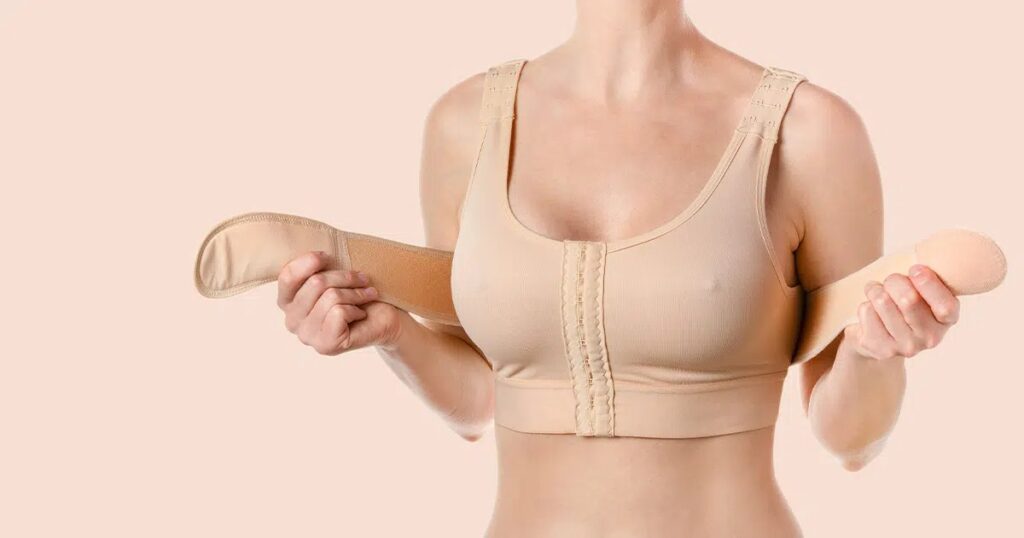
- Wear a supportive surgical bra to reduce swelling and support the new shape of your breasts
- Take pain and other medications as directed
Weeks 2–3: Gradual Improvement
- What to Expect
- Swelling decreases, bruising fades, and discomfort subsides
- Increased comfort with light activities
- Focus is primarily on incision care
- Activities and Restrictions
- Resume light activities like walking but avoid intense exercise
- Incision Care
- Start using prescribed ointments or scar treatments as directed by your surgeon
Weeks 4–6: Getting Back to Normal
- What to Expect
- Most swelling resolves, and scars begin to fade
- Breasts feel more natural and settle into their final shape
- Activities
- Resume light exercises and non-strenuous routines
- Avoid high-impact activities
- Avoid underwire bras until fully healed
Months 2–3: Final Recovery Phase
- What to Expect
- Final breast shape is achieved
- Scars continue to fade
- Significant improvement in quality of life as both chronic and surgical discomfort resolve
- Resume all physical activities, including weightlifting and running, without restriction
Aftercare Tips for a Smooth Recovery
Taking good care of yourself after a breast reduction helps you feel better faster and avoid complications. Tips for helping yourself after surgery include:
- Taking prescribed or over-the-counter pain medication as directed and needed
- Wearing a supportive surgical bra 24/7 during the initial recovery phase to reduce swelling
- Keeping incision sites clean and dry to prevent infection
- Using silicone scar sheets or creams to reduce scar visibility after incisions heal
Common Recovery Challenges
We want your recovery to go off without a hitch, but we can’t promise that there won’t be any hiccups along the way. It is, for example, common for patients recovering from a breast reduction to experience some temporary numbness around the nipple or the incision site. This is the result of tissue removal and usually resolves with time.
Asymmetry can be an issue while recovering from breast reduction as well. Although your plastic surgeon will be sure to make your breasts the same size and shape, they won’t necessarily swell evenly during recovery. This can make your breasts look asymmetrical or lopsided until the swelling goes down. Although temporary, the effect can be unsettling.
Many women are surprised to find themselves experiencing an emotional adjustment after their breast reduction. Even though smaller breasts are something that you want and that can resolve chronic pain, it can take some time to adapt to seeing something different when you look in the mirror. A part of you is removed during surgery, and that can take some getting used to.
When to Contact Your Surgeon
Unfortunately, although rare, surgical complications can occur. If they do, it’s important to reach out to your surgeon for help. If you’re not sure whether you’re experiencing a problem or not, it’s always better to play it safe and check with your surgeon. Make sure you reach out if you experience:
- Excessive swelling, redness, or drainage from incision sites
- Persistent pain unresponsive to medication
- Fever or unusual symptoms that could indicate infection