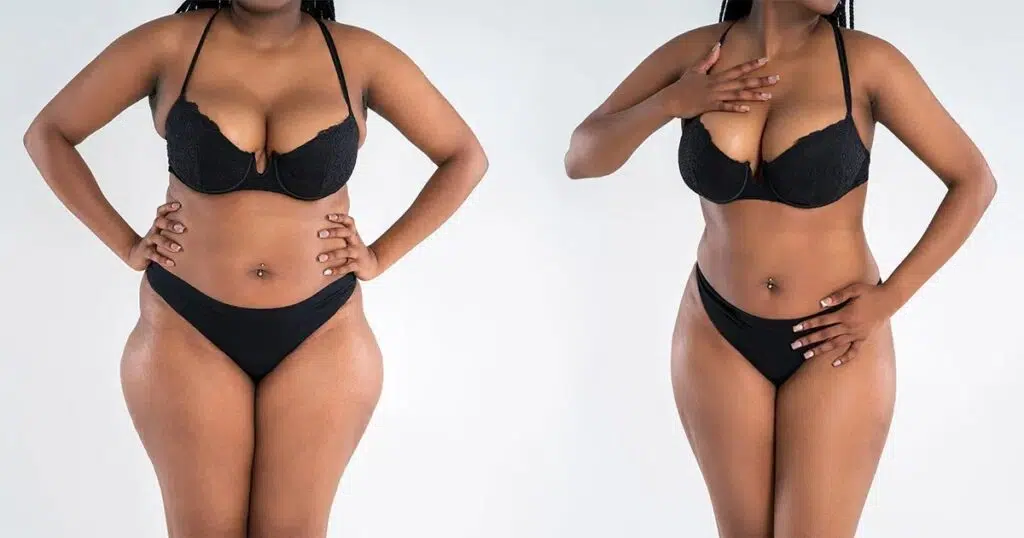
What Is a Fat Transfer to the Hips?
If hip dips are driving you crazy, or if you would like a more sculpted hourglass figure, you may want to consider a fat transfer to the hips. Also known as hip augmentation or fat grafting, this procedure injects donor fat into the hips to enhance volume and smooth out indentations. The best part is that the donor fat comes from you. It’s harvested via liposuction from places where you don’t want it, such as your abdomen or thighs, and used to shape the hips without the use of any artificial materials or implants.
What Are Hip Dips and How Can Fat Transfer Help?
Hip dips are indentations that can naturally appear between the hip and thigh bones. When present, hip dips can make the thighs look sharper and more angular. Transferring fat to the hips is an effective way to fill these dips for a rounder and more feminine appearance. Implants and dermal fillers can also get the job done, but both may feel firmer than fat. Both also require man-made materials to be introduced to the body, which can invite allergic reactions in some people. Dermal filler is also temporary, whereas fat augmentation lasts much longer.
How Fat Transfer to the Hips Works
A fat transfer to the hips can be broken down into three basic steps. Each one has its own complexities and nuances, of course, but your plastic surgeon has those covered! A general overview of how the process works is all most of us need, and it involves the following:
- Step 1 – Fat Harvesting
- Gentle liposuction removes fat from common donor sites like the abdomen, flanks, or thighs
- Step 2 – Purification
- Fat is processed to remove blood, oils, and excess fluids, leaving behind only healthy fat cells
- Step 3 – Injection
- The healthiest of these fat cells are carefully injected into the sides of the hips using microinjections for precision sculpting and symmetry
Hip Fat Transfer vs. BBL – What’s the Difference?
During a Brazilian butt lift (BBL), it’s common to do some lateral shaping of the hips. This can make it difficult to understand the difference between a BBL and a hip fat transfer. Although they are often combined, hip augmentation and BBL are two distinct procedures. A BBL adds volume and projection to the buttocks while a fat transfer to the hips focuses on widening your silhouette. One plumps your behind and the other focuses on plumping the sides of your hips. Think of it as adding fat behind you versus beside you.
Who’s a Good Candidate for Hip Dip Fat Grafting?
While it can be a great solution for the right candidates, a fat transfer to the hips isn’t right for everyone. So who is the right candidate? Those who meet the following criteria:
- Nonsmokers who are generally healthy
- Those who are bothered by dips or flatness in their hips
- Patients with enough body fat to harvest from donor areas
- People seeking a more curvaceous lower body without implants
- Individuals who have realistic expectations about what the procedure can do for them
What to Expect From the Procedure
Though we wish it did, recovery after a surgical procedure doesn’t happen overnight. What happens after surgery is often the most intimidating part of a procedure since you’ll be pretty out of it during the actual surgical event. We want you to understand what to expect on the day of your surgery and in the days that follow. Television psychologist Dr. Phil often says that monsters live in the dark, so shining a light on the unknown is the best way to alleviate certain fears and anxieties.
Timeline Overview
Fat transfer to the hips normally takes about an hour and a half to two hours. The surgery is performed on an outpatient basis, so you will go home the same day. Some patients choose to be under general anesthesia for the procedure while others opt for awake liposuction. If you choose awake liposuction, your plastic surgeon will use local anesthetic and twilight sedation rather than fully anesthetizing you.
Immediate Aftercare
After your surgery, you will experience swelling and soreness at both your fat harvesting and injection sites. Discomfort is typically mild to moderate and can be managed with pain medication. Expect to wear a compression garment for four to six weeks and be prepared to avoid sitting or lying directly on your hips for a week or two. This means no side sleeping for a bit.
Full Recovery
Most patients can return to work and light activity in five to seven days. You won’t see your final results for two to three months, however. Results don’t show until all of the residual swelling eases and the transferred fat settles into its new home. During this process, 20 to 40% of the fat cells transferred to your hips will die. The rest will take hold and form the new shape of your hips. The death of some transferred fat cells is normal and expected, so you need not be alarmed if you see things changing a bit during the first few months after surgery.
How Long Do Results Last?
Fat transfer to the hips is considered a permanent procedure, but the word permanent often has a slightly different meaning when it comes to plastic surgery. Some of the fat transferred to the hips will die shortly after surgery, but 60 to 80% of the cells survive and become permanent tissue. This tissue will stay with you for many years to come, and some patients enjoy their surgical results for life.
Understand, however, that your body changes with time — and your surgeon can’t stop the clock on aging. As such, you could feel the need for a touch-up in a few years. It’s also of note that the fat cells transferred to your hips are a part of you and will do the same thing that other fat cells in your body are doing. If you gain a significant amount of weight and your fat cells get larger, the cells transferred to your hips will give in to peer pressure and get larger as well. The same is true if you lose a lot of weight and your fat cells shrink. You will need to maintain a fairly stable weight to retain your results after a fat transfer to the hips.
Risks and How Mia Aesthetics Plastic Surgeons Mitigate Them
Patients often experience swelling and bruising after a fat transfer to the hips. Some also experience lumpiness and asymmetry, but these are usually the temporary result of the body swelling unevenly. Lumps and asymmetry can occur but are uncommon when a skilled plastic surgeon like those at Mia Aesthetics performs the procedure.
Plastic surgeons reduce the risk of side effects and complications by using a layered approach to fat injections, adding tiny amounts of fat with each poke (microinjections). They also use the most recent fat purification methods to minimize the number of fat cells lost after transfer. You will be given a complete list of post-op instructions after surgery. Patients who follow these instructions closely tend to have better results than those who don’t. As always, we encourage patients to reach out to us if any questions or concerns arise after surgery. We’re here to help and happy to do so!